
REFRACTIVE SURGERY
<h4>Laser refractive surgery</h4>
Since de mid-20th century, several surgical procedures have been studied and perfected with the purpose of improving the quality of life of people who need wearing glasses or contact lenses to correct their visual defects. The aim of refractive surgery is to modify the cornea’s radius of curvature (by flattening it to treat myopia and by bending it to treat hypermetropia) in order to get a sharp focus of the images on the retina. Currently, it is achieved thanks to the excimer laser which produces a photoablation of the corneal stroma in relation to the power of the refractive defect.
<h5>INDICATIONS</h5>
They are essential requirements to operate on any refraction defect that patients are over 21 years of age and their refractive fault has been stabilised for at least two years (specially for the myopic). To carry out the preoperatory examination, for evaluating if patients can become real candidates to this kind of surgery, they must have stopped wearing contact lenses, in case they do, at least 15 days before the exploration. a)- Myopia: Taking into account that here the goal is achieving a flattening of the cornea, the laser will have to reduce its thickness never exceeding the limit of 250 microns of corneal thickness. For this reason, patients who have thin corneas or a high myopic power may not be eligible for laser surgery. Generally speaking, myopias up to 7-8 dioptres can be treated with laser, if they meet the above-mentioned requirements. B)- Hypermetropia: The laser, in hypermetropia, performs a bending of the cornea. That’s why its thickness has not so much influence as in myopia. Nevertheless, it has been proven that both the vision quality and the dioptres limit to be treated with laser mustn’t exceed 4-5 dioptres. The visual recovery is slightly slower than in the myopia operation. c)- Astigmatism: The astigmatism correction can be carried out both in the pure cases and in those associated to the above-mentioned defects.
<h5>SURGICAL TECHNIQUES</h5>
It is an ambulatory operation that can be performed monocularly or bilaterally during the same surgical procedure under local anaesthetics, that is to say, by instilling some anaesthetic drops on the eye’s surface only, along with some tranquiliser to be taken orally if the patient’s anxiety makes it necessary. This surgery is absolutely painless. There exist two techniques.
<h5>LASIK</h5>
By means of a microkeratome or a femtosecond laser we separate a thin layer from the cornea (called flap) in order to apply the laser immediately afterwards on its stroma. Then, we put back the corneal flap without suture and the procedure can be considered as concluded. The maximum length of time this kind of operation takes is about 5 minutes per eye. Patients can leave the clinic a few minutes later and will be able to resume their normal activities after some hours although their final degree of vision won’t be completely stabilised until 1-3 days after surgery. Despite some complications have been described during the surgical act, with the current technology available, they are a real exception and their incidence doesn’t exceed 0,5%. The asepsis measures and antibiotic coverage make it almost impossible to show any sign of infection. Photo 1 and 2 – Left: PRK laser is used after removing the epithelium. Right: LASIK, after lifting a flap, the laser is applied.
<h5>PRK</h5>
By using a slit-knife or a sponge, and with the help of an alcohol solution, we wipe the corneal epithelium of the area to be treated. It is then that we can apply the laser on the bed we have just obtained. Finally, we place a therapeutic contact lens until the corneal epithelium is regenerated, which usually occurs within 3-4 days. This sort of surgery is painless but, during the immediate post-operative hours of the first two days, patients might experience ocular pain or discomfort. By this technique vison may take longer to become perfect. However, it doesn’t require lifting any flap which allows us to avoid one step in the surgery procedure and eventual problems in the future caused by traumatisms.
<h5>POST-OPERATIVE PERIOD</h5>
Patients will be able to resume their normal activity some hours after the operation, nonetheless, they should avoid stuffy atmospheres (smoke above all), or driving any vehicle until their vision allows them to (between 24-48 hours). Additionally, (and the most important thing) they must not rub their eyes along the first 15 days. They will also have to apply themselves antibiotic and anti-inflammatory eyedrops for some days. Since this operation causes a certain degree of dryness at the beginning, it will be also necessary the instillation of artificial tears over a period of 2-6 months. During the first days, patients may also notice a little “foggy” vision by night. This will disappear in a few days. It is more common amongst those who had high vision defects. The final result must be evaluated 6 months later and, if by any chance, some residual defect was still found, the operation could be performed again without any problem provided that the remaining corneal thickness allowed us to.
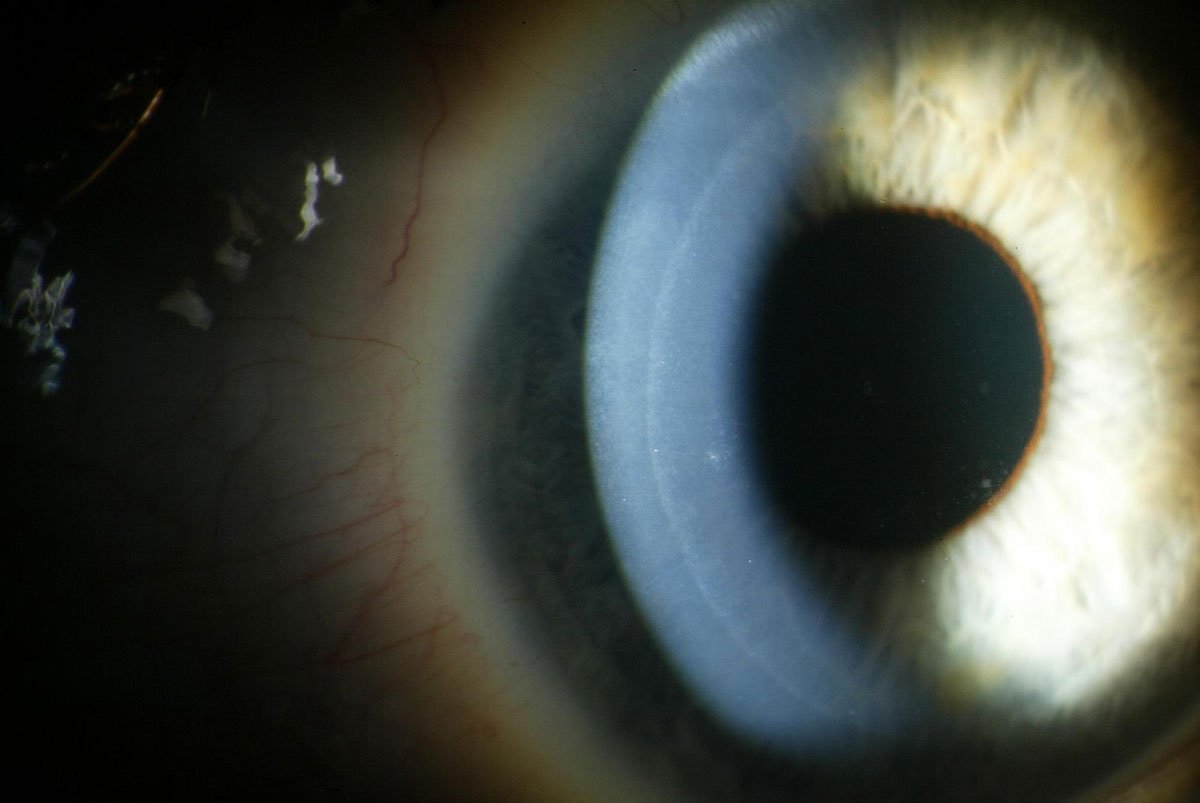
Image of an eye after being operated on with LASIK technique. The flap incision is barely noticeable.
Por qué
García de Oteyza

Experiencia y excelencia médica
Más de 50 años dedicados al cuidado de la salud visual. Contamos con una amplia experiencia en cirugía ocular.

Trato humano y atención personalizada
Creemos en una medicina cercana. Escuchamos, explicamos y acompañamos a cada paciente durante todo el proceso.

Innovación y precisión
Contamos con equipamiento que nos permite realizar diagnósticos precisos y ofrecer tratamientos personalizados y seguros.
Preguntas frecuentes